Last Wednesday, the Cedar Park PTC welcomed Kristopher Damiano, BSD TOSA for Socio-Emotional Learning to present on ways to identify & manage student stress (recap below).
Additionally, Dr. Anderson provided a quick CPMS update, Bettina Jeszenszky, PTC President, ran through several PTC items and Skye Kutansky, Treasurer, presented our YTD numbers.
Items of note included:
A full recap of the night's info & presentation is available HERE or in a translatable smore.
**A video of the night’s presentation will be available soon on Cedar Park’s YouTube channel.
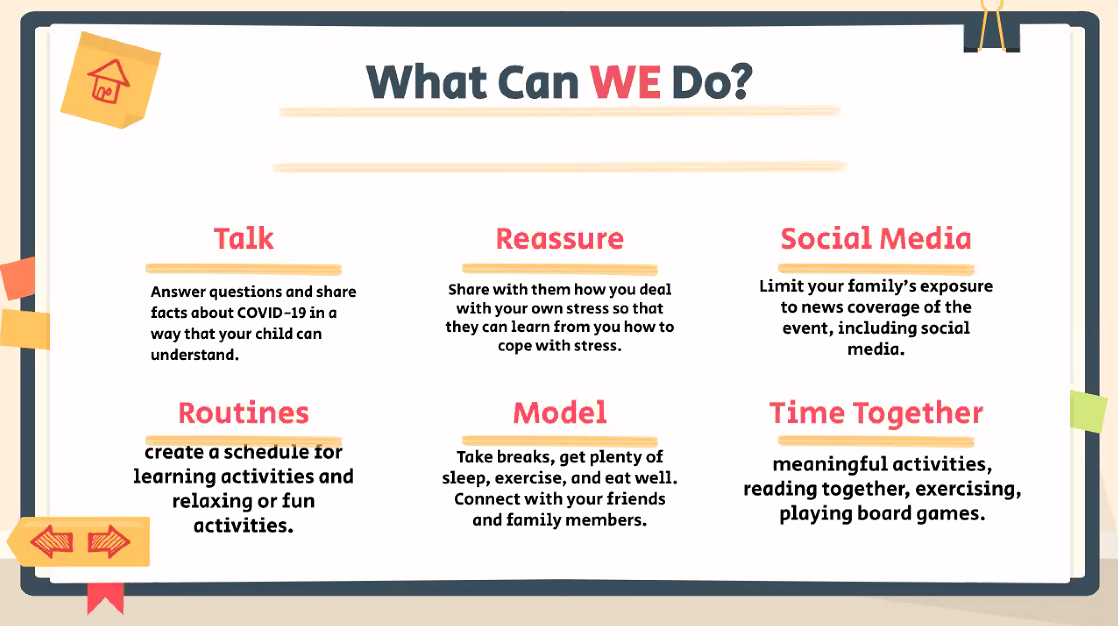
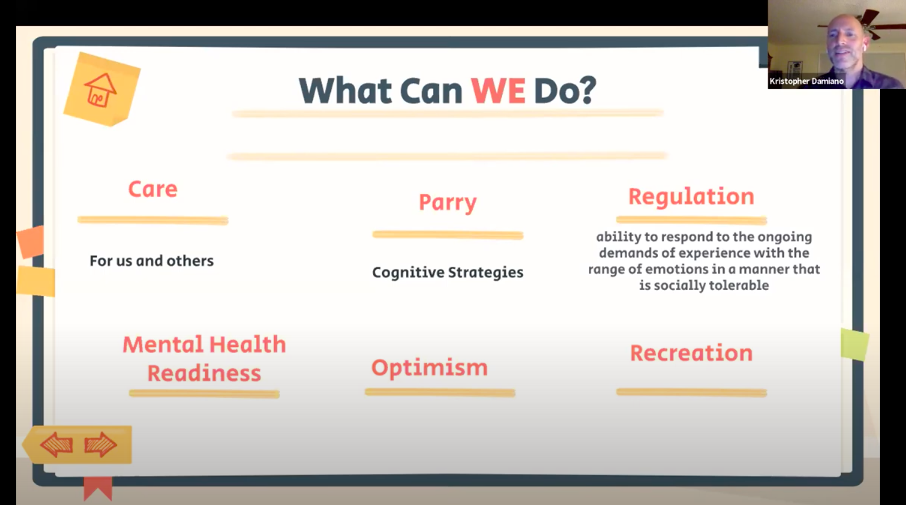
Helping Your Student Identify, Address & Manage Stress with Kristopher Damiano
Kristopher Damiano, BSD TOSA (Teacher on Special Assignment) for Socio-Emotional Learning, began his presentation asking attendees to write in the chat how they are feeling. Responses ranged from stressed, drained, overwhelmed, done etc.
Kris shared that a recent international poll found the same thing-- when asked that same question, over 95% of responses were negative. That’s telling of the emotional and mental strain our world is currently experiencing.
Identifying Challenges Facing Our Kids:
Missing in Life Events: Zoom birthdays, vacations, homecoming, 8th grade celebration, no first day of school for 6th graders (fun experience missed)
Pressure vs. Stress
Stress is a catch-all description (even for adults). For tonight, we’ll define stress as a response to too many demands and not enough resources to meet those demands. Students are being pushed up against increasingly adult issues and they don’t always have ability/resources to deal with them.
This is opposed to pressure, which is the perception that something is dependent on their performance. Students may often say that they are stressed by school work, but more accurately defined as pressure.
Recognize & Address Fear & Stress
Stress can manifest itself in behavioral changes (moody, rude, cranky, acting out, withdrawing), emotional changes (increase or decrease throughout the day), physical changes (stress eating & less active, getting sick more often) and thinking (negative thoughts, less optimism).
Parents are being tasked to be clinicians to recognize so much, but it’s okay to not to be perfect, but keep trying.
Some symptoms of stress that you may notice include:
Perseverating fear and worry
Changes in sleep or eating patterns
Difficulty sleeping or concentrating
Difficulty making decisions
Chronic health/mental health problems worsen
Substance use/abuse
Educational issue and/or change in socialization